What is apmix? One API key for GPT, Claude, Gemini and every top model
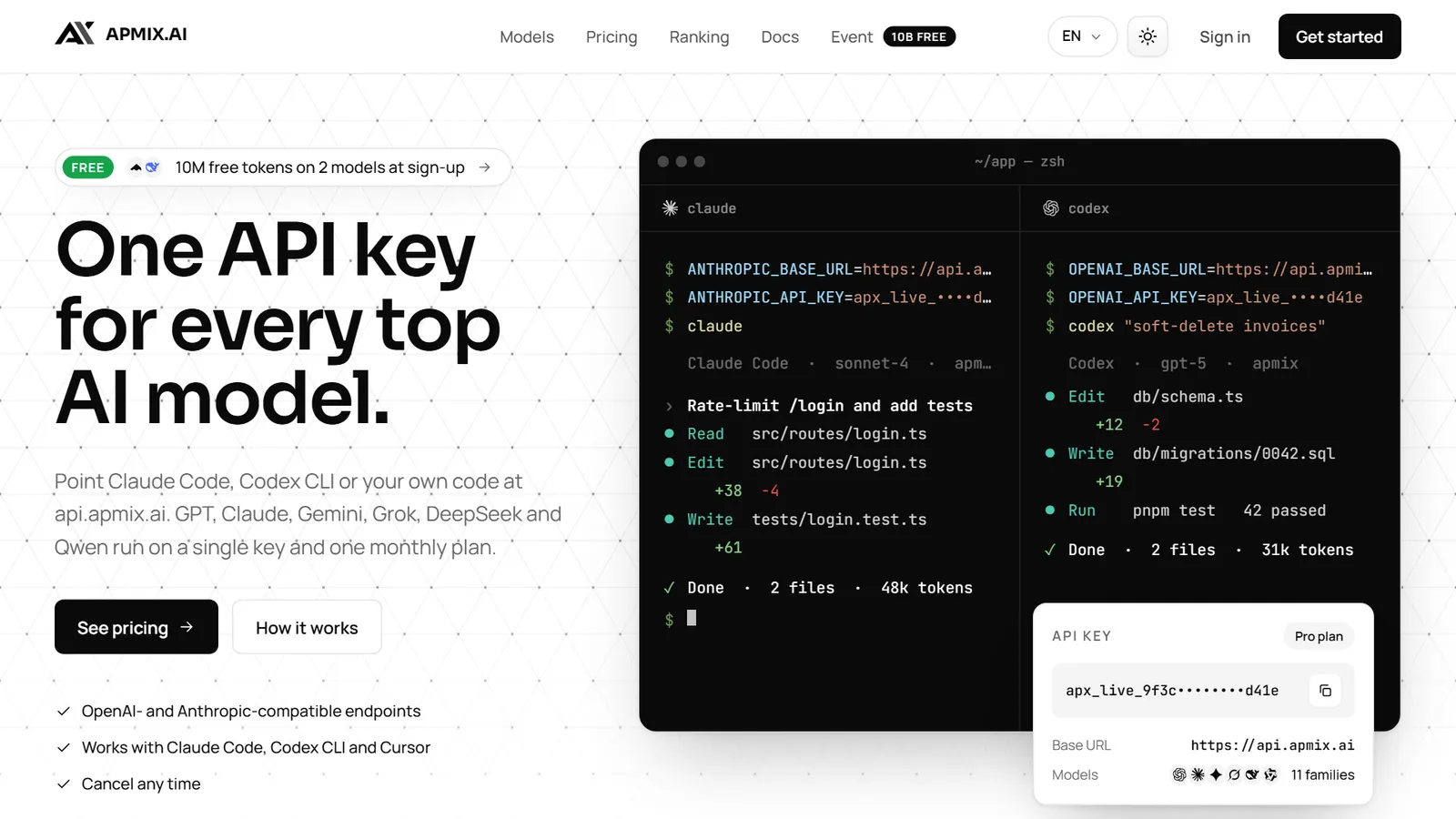
apmix is an AI API gateway sold as a monthly plan: one key, one endpoint and one bill for GPT, Claude, Gemini, Grok, DeepSeek, Qwen and more, working with the tools you already use.
 The apmix teamPublished 3 min read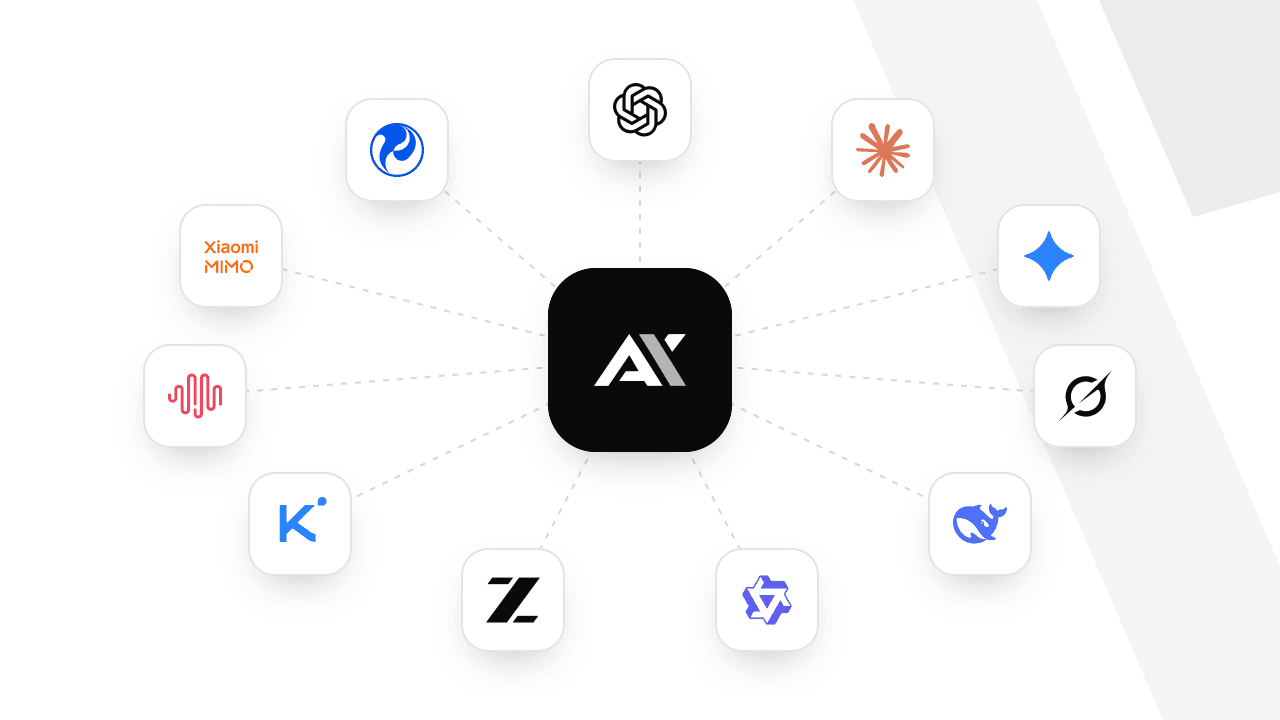
On this page
Using the best models of 2026 usually means collecting accounts: one with OpenAI, one with Anthropic, one with Google, another for DeepSeek or Qwen. Each has its own key, its own dashboard, its own rate limits and its own invoice at the end of the month. apmix replaces all of that with a single API key and one monthly plan.
One key reaches more than forty models from OpenAI, Anthropic, Google, xAI, DeepSeek, Alibaba, Z.ai, Moonshot, MiniMax, Xiaomi and Tencent. Your code and your tools do not change: apmix speaks the same APIs they already use.
How it works
apmix is an API gateway. You send a request to api.apmix.ai with your apmix key and the name of the model you want; the gateway routes it to that model and streams the answer back. Switching from GPT to Claude to DeepSeek is a change of one field, model. The key, the endpoint and the bill stay the same.
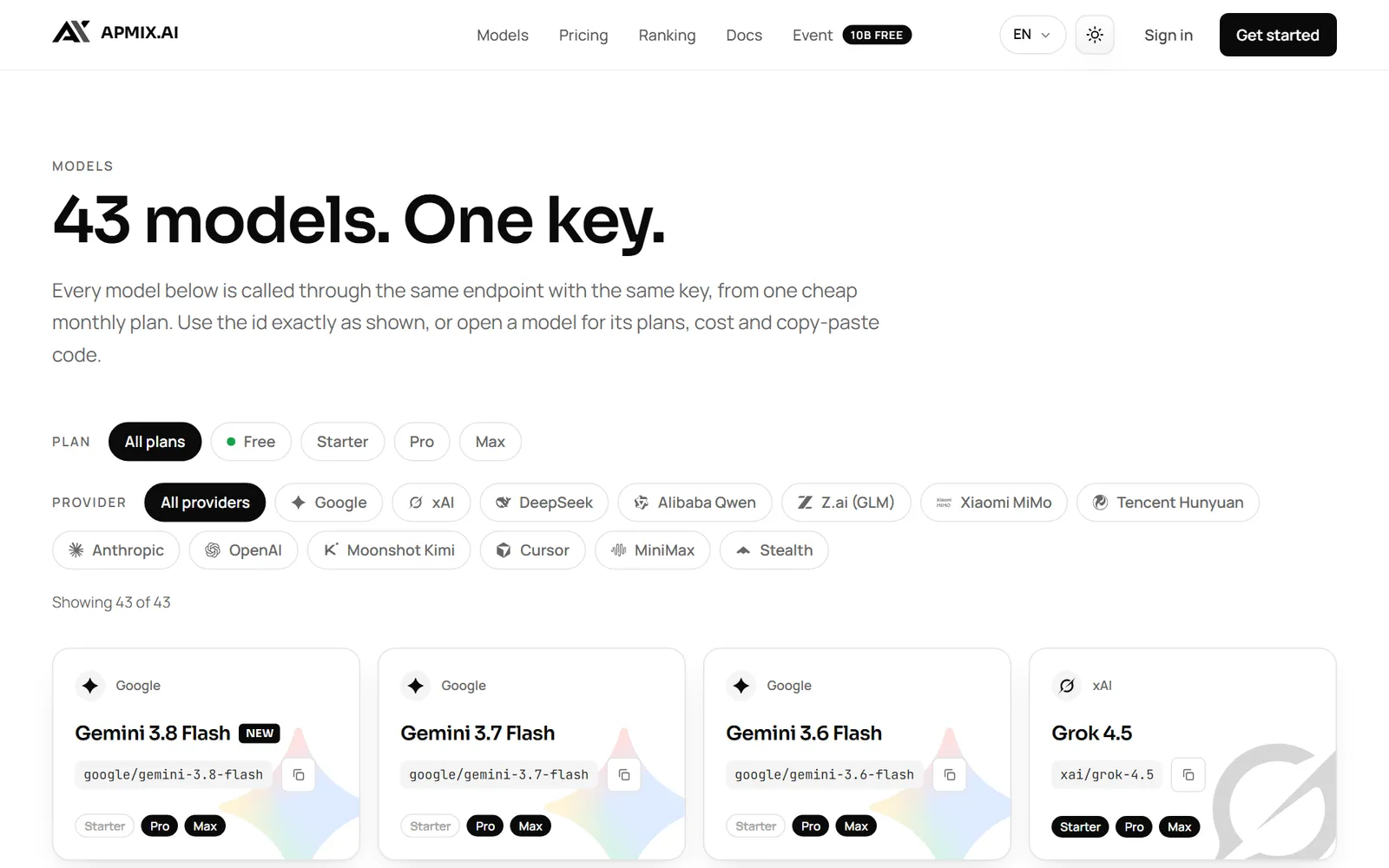
There are two compatible APIs, so almost every tool and SDK works out of the box:
A first request takes one line:
curl https://api.apmix.ai/v1/chat/completions \
  -H "Authorization: Bearer apx_live_YOUR_KEY" \
  -H "Content-Type: application/json" \
  -d '{"model": "gpt-5.6-luna", "messages": [{"role": "user", "content": "Say hello in five words."}]}'
And in Python, the official OpenAI SDK only needs a different base_url:
from openai import OpenAI

client = OpenAI(base_url="https://api.apmix.ai/v1", api_key="apx_live_YOUR_KEY")

reply = client.chat.completions.create(
    model="claude-sonnet-5",
    messages=[{"role": "user", "content": "Explain rate limiting in one paragraph."}],
)
print(reply.choices[0].message.content)
One allowance for every model
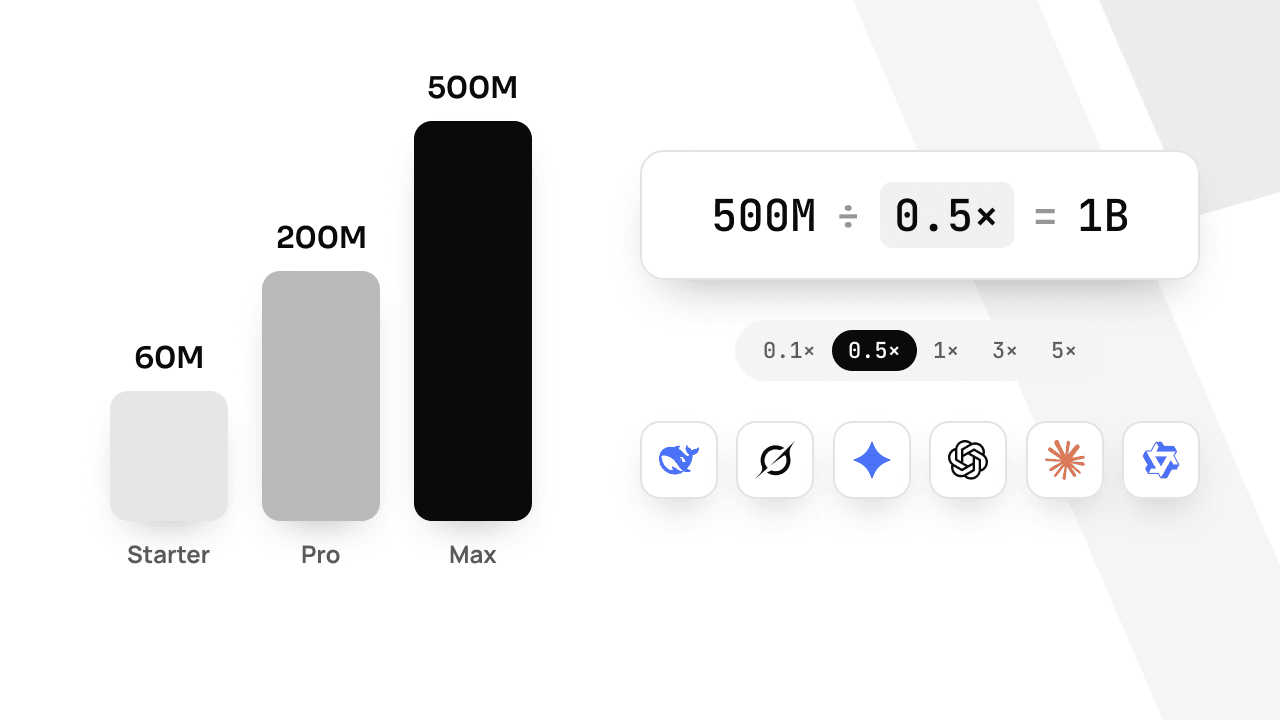
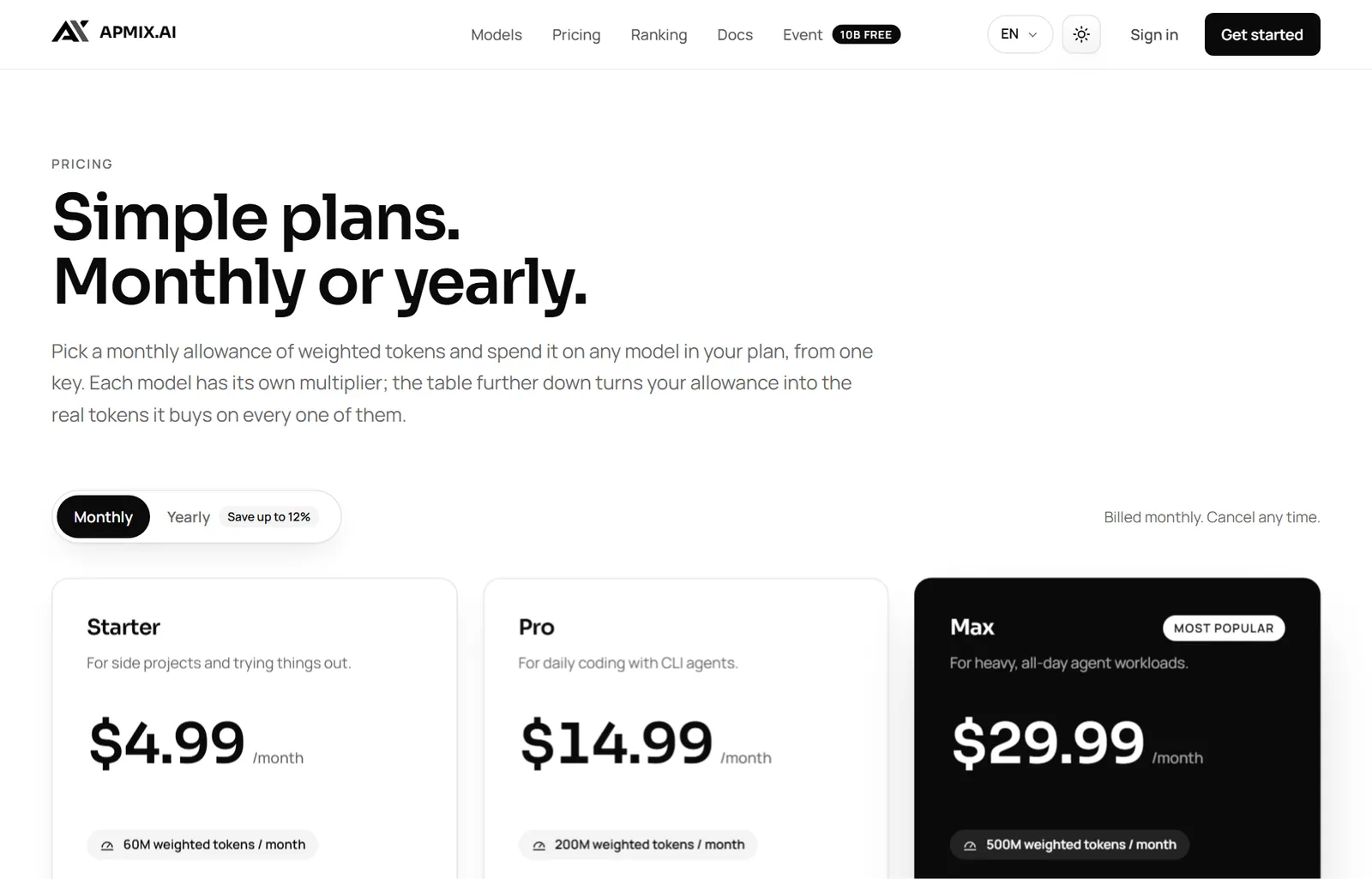
Every plan comes with a monthly allowance of weighted tokens. Each model has a multiplier: a token on a fast model counts once, a token on a frontier or reasoning model counts more. Every prompt and completion token is multiplied by the model's rate and taken from the same allowance, whichever model and whichever key sent it.
That means one number to watch instead of six bills, and no daily or weekly caps unless you set them yourself. If you want the details, with worked examples, read weighted tokens, explained.
Plans
Plans are tiered: each one includes the models of its own tier plus everything below it, so Max covers the whole catalog. The pricing page shows exactly which plan includes each model and how many real tokens each allowance buys on it.
Works with the tools you already use
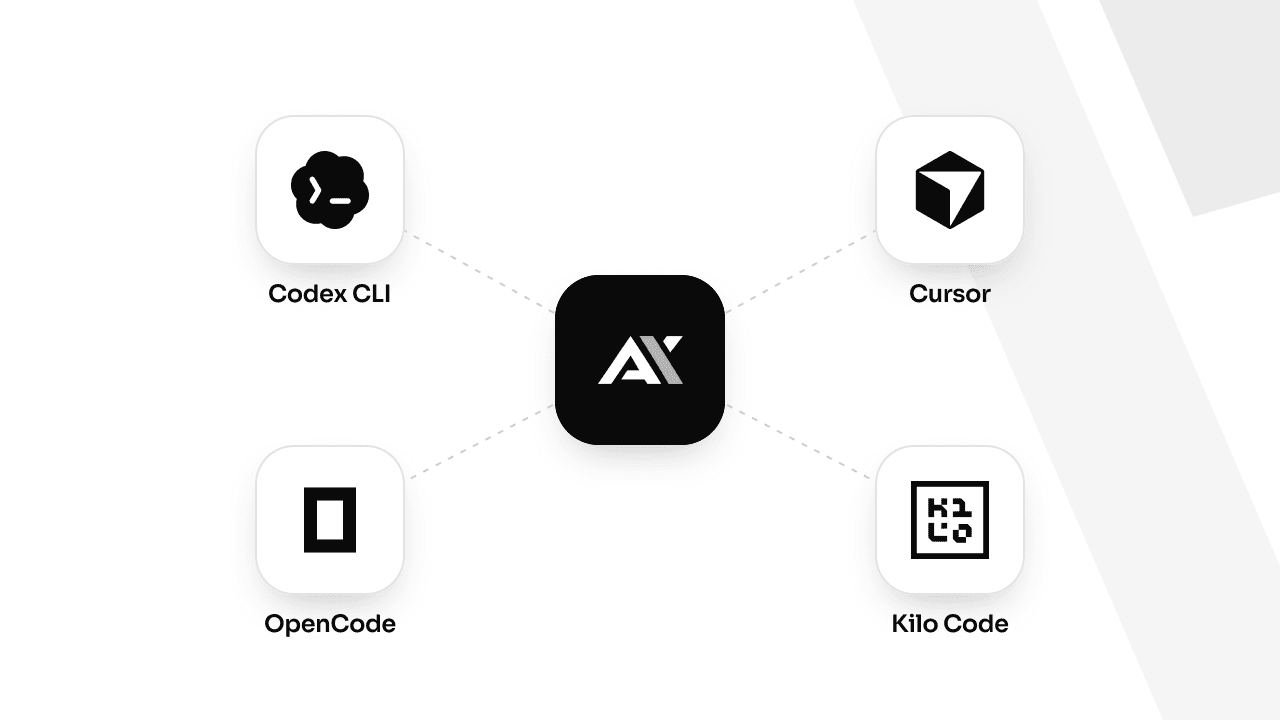
Anything that lets you set an OpenAI or Anthropic base URL works with apmix. There are step-by-step guides for the most popular coding agents:
- Claude Code, Anthropic's terminal agent, in two minutes.
- Codex CLI, Cursor, OpenCode and Kilo Code on the same key.
- Pi, Kimi Code, Grok Build, DeepSeek Harness, Hermes and ZCode in the docs, with copy-paste setup for Windows, macOS and Linux.
More than a key
The dashboard is built for people who ship with AI every day:
- Live logs of every request: model, tokens, latency and the tool that made the call.
- Usage by model and by key, so you see where the allowance goes.
- Your own limits: optional daily and weekly caps, and email alerts when you reach a share of the month.
- Useful headers on every response, such as
x-apmix-remainingfor what is left of your allowance andx-apmix-request-idfor support. - Top-ups when a month runs short: one-time packs from $1.49 that never expire.
Billing is simple too. Pay by card, Apple Pay, Google Pay or PayPal, cancel any time, and monthly plans are refundable in full while less than 5% of the month's allowance has been used.
Get started in a minute
- Sign in with Google, GitHub or an email link. Your account is created on the first sign-in.
- Create an API key in the dashboard.
- Point your tool at
api.apmix.aiand pick a model from the catalog.
That is all. Every model in your plan answers from the first request, on the same key.